


InstaService: Home Services
4.532.00 Reviews
App Specs
- Version
- 1.1.2
- Updated On
- License
- Free
- Downloads
- 10,000+
- Developer
- InstaService
- Categories
- House & Home
- Platform
- Android
Screenshots
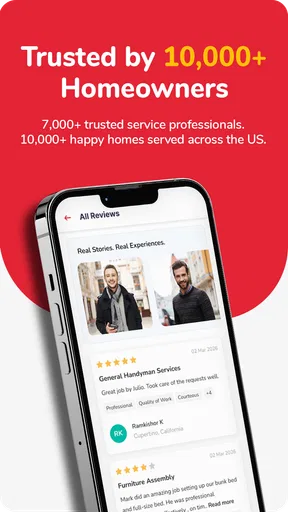
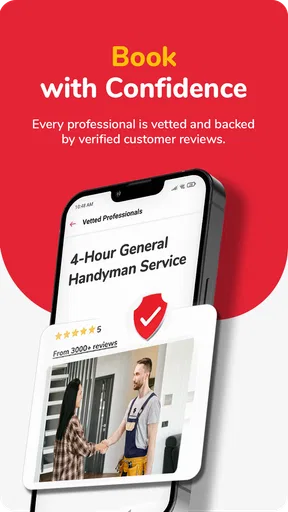


 Analysis by AppCompare
Finding someone to fix a leaking tap, clean a room, or handle an awkward household repair is usually harder than the actual job. I tried InstaService: Home Services with that everyday problem in mind, and my overall impression is straightforward: it is a useful starting point for arranging help nearby, especially when I want one place to look instead of asking friends, searching social media, and calling several businesses. It is not a replacement for checking the worker, confirming the scope of a job, or comparing alternatives, but it can make the first step much less tiring.
The app comes from InstaService and sits in the House & Home category. It is free to use, aimed at everyone, and available for devices running Android 7.0 or later. Its current version is 1.1.2, and the service has built a modest but encouraging audience, with over 10 thousand installs and a 4.5 average from around 105 ratings. Those figures do not tell me whether every booking will be smooth, but they do suggest that the concept is already useful to a real group of homeowners and renters.
What using InstaService feels like in practice
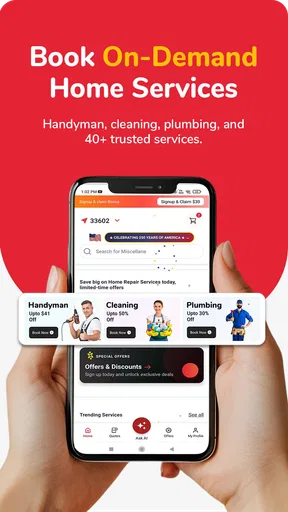
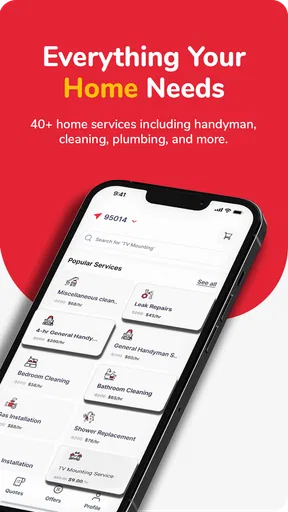
The main appeal is the way the app brings several household needs into the same search experience. Instead of treating plumbing, cleaning, repairs, and general handyman work as completely separate errands, it presents them as parts of one broader home-service task. That matters on busy days. If I am already trying to arrange a repair, I can think about other small jobs that have been waiting rather than starting a new search from scratch later.
I found the app most valuable at the discovery stage. A normal web search often mixes large companies, individual tradespeople, old listings, advertisements, and advice articles. Asking for recommendations through a neighborhood group can work, but replies may take time and the suggestions are not always relevant to my area. A dedicated service app gives the request a clearer purpose: I am looking for practical help near me, not just reading about how to fix something.
That distinction is important. InstaService is best understood as a convenient bridge between a household problem and a possible service provider. I would not treat the first result as an automatic choice. I would use the app to narrow the field, describe what needs doing carefully, and then confirm the details before agreeing to anything.
A realistic Saturday use case
Imagine moving into a rented apartment on a Friday evening and noticing three problems: a loose bathroom fitting, dusty kitchen cabinets, and a shelf that needs mounting. None of these jobs is necessarily dramatic, but together they can consume a weekend. With this app, I can begin by looking for the relevant home services in my area rather than searching for three unrelated companies.
My practical approach would be to separate the jobs before making contact. The plumbing issue deserves a clear description of the fitting, the cleaning request should mention the rooms and the condition, and the shelf installation should include the wall type if I know it. Combining everything into a vague request could create confusion, while treating each task clearly makes it easier for a provider to decide whether the work is suitable.
Worth Reading Before You Choose

EA SPORTS FC Mobile 26 Is a Bigger Football Game, but It Takes Time

Flipboard Shows What News Apps Must Do Beyond the Feed

Switching to Android Auto Means Rethinking Your Driving Routine

Google Calendar Makes a Crowded Week Easier to Manage

Ludo King Makes the Most of the Minutes Between Plans

Baby Panda World Brings Quick Play to Modern Phones, but Its Game Library Feels Busy
This is one of the less obvious strengths of a multi-service app: it encourages me to plan household maintenance as a group of manageable tasks. That can save time, but it also creates a trade-off. A single provider may be convenient for several simple jobs, while a specialist may be the safer choice for anything involving gas, electrical systems, structural work, or a complicated water problem. Convenience should not be allowed to replace technical judgment.
Where the app is genuinely helpful
The strongest part of the experience is the reduction of search friction. I do not need to remember which local business handles which kind of work before I begin. The broad focus on handyman, repair, cleaning, and plumbing services makes the app relevant to the small, annoying jobs that often fall between major contractors and do-it-yourself projects.
It is also a sensible option for people who have recently moved, live in an unfamiliar neighborhood, or do not have a reliable list of local contacts. In those situations, the value is not only speed. It is having a structured place to start when personal recommendations are unavailable.
I can also see the app helping landlords and people who manage more than one property, provided they keep their own records outside the app. A request can be prepared around the actual condition of a room instead of relying on a rushed phone explanation. For recurring maintenance, I would save the job details, provider contact information, and agreed work separately so that the app remains the discovery tool rather than becoming my only record.
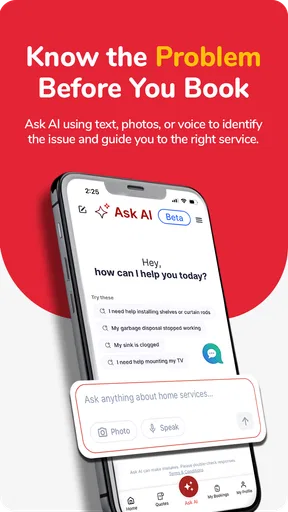
Another useful habit is to photograph the problem before describing it. A picture of a damaged hinge, blocked drain area, stained surface, or loose fixture can communicate context that a short text description misses. The app may help me find a service, but the quality of the initial explanation still affects the quality of the response. Clear photos, approximate dimensions, access information, and preferred timing can prevent an avoidable exchange of messages later.
The limitation that matters most
The biggest weakness is not that the app covers too many services; it is that a broad service directory can make the final decision feel less certain. A listing or contact option is only the beginning of the process. I still need to establish availability, total cost, materials, arrival timing, cancellation expectations, and what happens if the job reveals a larger problem.
This is especially important for plumbing and repair work. A short description such as “leak under the sink” can mean a loose connection, a damaged pipe, a worn seal, or water damage inside the cabinet. Those situations can differ greatly in time and cost. I would never approve work based only on a general service label. Before the visit, I would ask whether inspection is charged, whether parts are included, and whether I will be contacted before extra work begins.
Cleaning requests have their own ambiguity. “Deep cleaning” can mean different things to different people, and a normal apartment, a post-move property, and a heavily soiled kitchen are not equivalent jobs. I would specify the number of rooms, the areas that matter most, whether supplies are available, and whether appliances or windows are included. This is not a criticism unique to InstaService; it is a common weakness of app-based service matching. Still, the app cannot remove that responsibility from me.
I also would not choose this app for an emergency where delay could cause serious damage or danger. A burst pipe, electrical smell, suspected gas issue, or security problem calls for the appropriate emergency service first. An app designed to help locate ordinary home services is better suited to planned or non-critical work. Knowing that boundary is part of using it responsibly.
How it compares with the usual alternatives
The traditional alternative is a local search engine, neighborhood recommendation, or direct call to a known tradesperson. Those methods can be better when I already trust someone, need a highly specialized contractor, or want to negotiate directly with a business that has served me before. They may also provide more background information, depending on the provider.
InstaService has the advantage when I do not know where to begin. Its category focus is narrower than a general web search, and that makes the first screen less cluttered with unrelated results. For a small household task, that convenience can be worth more than spending time building a list from several sources.
On the other hand, a direct relationship can be stronger for repeat work. If I have a dependable plumber who knows the layout of my home, calling that person is likely more efficient than starting again in an app. Likewise, a specialist company may be preferable for renovation planning, complex electrical work, pest control, or jobs requiring formal documentation. I see InstaService as a useful front door, not as the best answer for every type of property work.
Compared with doing the work myself, the app is most attractive when the task is unfamiliar, physically awkward, or likely to become worse if handled incorrectly. I might still install a simple shelf or replace a basic fitting myself if I have the right tools and confidence. Paying for help makes more sense when the cost of a mistake would exceed the service charge, or when my time is more valuable than the effort involved.
Small habits that make the service more effective
My first tip is to write the request as if the person receiving it cannot see the room. Mention the exact location, visible symptoms, approximate size, and whether the property is occupied. “Bathroom tap is dripping from the handle” is more useful than “tap repair.” This improves the chance of receiving a relevant response and helps avoid a provider arriving without the right context.
My second tip is to ask for a written breakdown before work starts. I would separate labor, materials, travel or inspection charges, and possible additional work. Even if the app makes finding a provider easy, the agreement still needs to be clear between the customer and the service professional. A low initial estimate is not useful if important items are left undefined.
My third tip is to group jobs only when doing so genuinely helps. Several small tasks at one address may be convenient, but a mixed request can also attract a provider who is comfortable with one part and unprepared for another. For a cleaning appointment and a minor handyman task, grouping might save coordination. For plumbing combined with electrical work, I would prefer appropriate specialists unless the provider clearly handles both areas.
A fourth practical habit is to prepare the home before the appointment. Clear access to the sink, move fragile items away from the cleaning area, and keep relevant keys or building instructions ready. This sounds basic, but it reduces paid waiting time and gives the worker a better chance of completing the job properly. The app can simplify finding help; it cannot prepare the property for the visit.
Who should use it, and who should look elsewhere
I would recommend InstaService to renters, homeowners, busy families, older users who prefer arranging help digitally, and anyone who has recently moved to a new area. It is particularly suitable for ordinary maintenance that is important but not an emergency: cleaning before guests arrive, fixing a minor household issue, handling a small installation, or finding someone for a job that has been postponed for too long.
It may also suit people who dislike making several phone calls. Starting from an app feels less intimidating than explaining a problem repeatedly to different businesses. For someone who wants to compare the type of help available before committing, that is a meaningful benefit.
I would suggest a different route for users who need a guaranteed appointment immediately, require a licensed specialist for regulated work, or already have a trusted professional. People managing large renovation projects may also want a contractor with detailed estimates, formal contracts, project supervision, and a longer service history. InstaService is more naturally suited to everyday home-service discovery than to major construction management.
Because the app is free and rated for everyone, it is easy to try without a financial barrier at the download stage. That does not mean the services themselves are free, of course, so I would approach each request with the same price awareness I would use when calling a business directly. The free app removes one hurdle; it does not remove the need to budget for labor and materials.
My final view after weighing the trade-offs
InstaService: Home Services succeeds because it addresses a very ordinary problem in a practical way: finding suitable help is often more difficult than recognizing that help is needed. Its broad home-maintenance focus makes it more useful than a generic search when I am dealing with small repairs, cleaning, plumbing, or handyman work and do not already know whom to call.
Its limits are equally clear. I still have to describe the job accurately, check whether the provider is appropriate, clarify the price, and decide whether the work is urgent or specialized. The app is not a guarantee of quality, and it should not be treated as one. The best results come when I use it as an organized starting point and bring careful questions to the next step.
For me, the clearest recommendation is this: use InstaService when you need a practical way to begin a local household-service search, but keep responsibility for the final choice. That balance makes sense for routine maintenance and cleaning, especially when personal recommendations are unavailable. If the job involves danger, major damage, formal certification, or a complex project, a dedicated specialist is the better option.
Released on April 20, 2024, and now at version 1.1.2, the app has a focused purpose rather than trying to become a complete property-management system. I appreciate that simplicity. It gives me a convenient place to look, helps turn vague household chores into specific requests, and can save time at the most frustrating part of the process. I would recommend giving it a try for normal, non-urgent home tasks, while treating every booking as a decision that deserves the same care as any offline arrangement.
Pros
- Conveniently compare local professionals for different household needs.
- Booking requests can be submitted without lengthy phone calls.
- Useful for recurring maintenance and one-time home service tasks.
- Service categories make it easier to find the right type of help.
- Helpful option for users with limited time or mobility.
Cons
- Availability and service quality may vary by location.
- Some providers may respond slowly to booking requests.
- Final prices can differ after the professional inspects the job.
- The app may offer limited choices in smaller towns.
- You may need to share home and contact details with providers.
FAQs for InstaService: Home Services
What is InstaService: Home Services and what can I use it for?
InstaService: Home Services is designed to help users find and request professional assistance for everyday household needs. Depending on the services available in your area, you may be able to arrange cleaning, repairs, maintenance, moving help, beauty services, or other home-related tasks. The app brings service discovery, booking, communication, and appointment management into one convenient platform.
How do I book a service through InstaService?
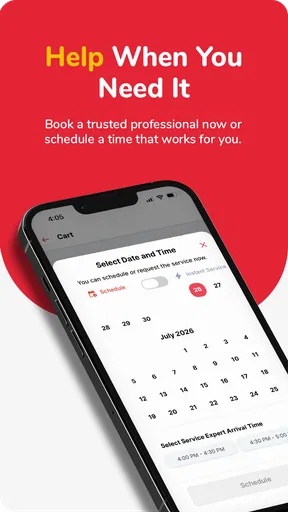
To book a service, you generally need to create an account or sign in, select the type of help you need, provide your location and job details, and choose an available provider or appointment time. Before confirming, carefully review the service description, estimated price, cancellation terms, and any additional charges. Availability and booking steps can vary depending on your location and the provider.
Are the service providers on InstaService trustworthy and verified?
InstaService may display provider profiles, ratings, reviews, and service information to help you make a more informed choice. However, users should not assume that every listing carries the same level of screening or insurance. Before allowing anyone into your home, check their profile details, confirm the appointment through the app, and use the platform’s reporting or support tools if anything seems suspicious.
How much does InstaService cost, and are there extra fees?
Downloading or using the InstaService app may be free, but the actual cost depends on the service, provider, location, job complexity, materials, and appointment timing. Some bookings may include platform, travel, urgent-service, or cancellation fees. Always review the final price or estimate shown before confirming, and ask the provider about possible additional costs when the work cannot be accurately priced in advance.
What should I do if I need to cancel a booking or have a problem with a service?
If your plans change, open your booking details in InstaService and look for the cancellation or rescheduling option as soon as possible. Refund eligibility may depend on how far in advance you cancel and the provider’s policy. For missed appointments, unexpected charges, poor workmanship, or safety concerns, save messages and receipts, contact the provider first when appropriate, and then reach out to InstaService support through the app.


